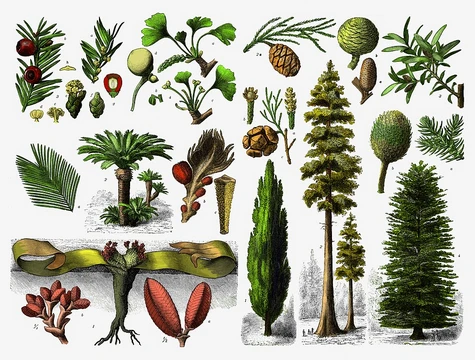
Sequoiadendron giganteum
Largest trees on Earth, endangered in native California.

Sequoiadendron giganteum, also known as the giant sequoia, giant redwood, Sierra redwood, or Wellingtonia, is a species of coniferous tree in the family Cupressaceae, subfamily Sequoioideae. Giant sequoia specimens are the largest trees on Earth by volume, native to groves on the western slopes of the Sierra Nevada mountain range of California, though they have been introduced and grown worldwide.
Lore & Background
Endlicher likely named the genus after Sequoyah, not from Latin 'sequi' (to follow). Giant sequoias grow to an average height of 50–85 m with trunk diameters of 6–8 m; the General Grant or General Sherman tree has a diameter at breast height of about 8.8 m or 8.2 m respectively, while the Grizzly Giant's DBH is about 7.7 m. The wood is fibrous, brittle, and unsuitable for construction, used historically for fence posts and shingles. The bark is fibrous, furrowed, up to 90 cm thick, and contains tannic acid for fire protection. Cones mature in 18–20 months but may remain closed for up to 20 years; seeds are released by heat from fire or insect damage. The species regenerates by seed and can sprout from stumps after injury at any age.
Reader's Guide
The species has high carbon storage potential for sequestration. The giant sequoia is a popular ornamental tree worldwide and has been introduced to artificial groves, such as those in Southern California's San Jacinto Mountains, where some trees are reproducing naturally. Its prehistoric range was much wider, with fossils found in North America, Europe, New Zealand, and Australia. The species is adapted to fire, with cones that open after fire and bark that resists burning, but it struggles to reproduce in its original habitat due to needing full sun and mineral-rich soils free of competing vegetation.
Did You Know?
- The General Grant or General Sherman tree has a trunk diameter at breast height of about 8.8 m or 8.2 m, while the Grizzly Giant's DBH is about 7.7 m.
- Wood from mature giant sequoias is fibrous and brittle, often shattering when felled, and was historically used for fence posts and shingles.
Frequently Asked Questions
What is Sequoiadendron giganteum?
It is a coniferous tree in the Cupressaceae family (subfamily Sequoioideae), widely known as the giant sequoia or Sierra redwood. It holds the record for the largest living tree on Earth by trunk volume.
Where does Sequoiadendron giganteum naturally grow?
Its wild range is confined to groves on the western slopes of California's Sierra Nevada mountains. Although cultivated specimens now thrive in gardens and parks worldwide, no other native populations exist.
Why is Sequoiadendron giganteum a big deal among gymnosperm fans?
It is the sole surviving species of its genus and the single largest tree species on the planet, making it both a living evolutionary relic and a conservation priority. Its restricted native range and threatened status keep it at the center of conifer-enthusiast discussions.
More in Conifers And Gymnosperms 25-34
Elsewhere in the Conifers And Gymnosperms universe
Spotted an error? Know more?
This is a living reference — every entry is fact-audited, and reader corrections feed straight into our audit queue. Suggest an edit · See this site's audit record