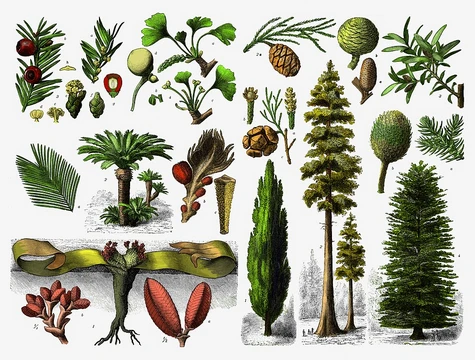
Picea mariana
A slow-growing boreal spruce with the smallest cones of any spruce.

Picea mariana, commonly known as black spruce, is a North American species of spruce tree in the pine family. It is widespread across Canada, found in all 10 provinces and all 3 territories, and is the official tree of Newfoundland and Labrador, though balsam fir is the most abundant tree in the province. Its range extends into northern parts of the United States, including Alaska, the Great Lakes region, and the upper Northeast, and it is a frequent part of the taiga or boreal forest biome.
- Scientific name
- Picea mariana
- Family
- Pine (Pinaceae)
- Native range
- Canada (all provinces and territories), northern United States (Alaska, Great Lakes, upper Northeast)
- Typical height
- 5–15 m (15–50 ft), occasionally up to 30 m (98 ft)
- Conservation status
- Not specified in article
- Known for
- Smallest cones of all spruces; primary source of pulpwood in Canada; provincial tree of Newfoundland and Labrador
Lore & Background
Growth varies with site quality; in swamp and muskeg, growth slows from edges toward the center. The roots are shallow and wide spreading, making the tree susceptible to windthrow. In northern parts, ice-pruned asymmetric black spruce with diminished foliage on the windward side are common, and tilted 'drunken trees' are associated with thawing permafrost. It is a pioneer that invades sphagnum mats in filled-lake bogs, often preceded by tamarack, and can out-compete shade-intolerant tamarack in bog succession.
Reader's Guide
Black spruce is ecologically significant as a dominant species across the vast boreal forest of North America, playing a key role in fire ecology and succession. It is tolerant of nutrient-poor, acidic peatlands and commonly grows in pure stands on organic soils. Its timber, though of low value due to small tree size, is an important source of pulpwood in Canada and is increasingly used for cross-laminated timber. The tree has cultural symbolism as the provincial tree of Newfoundland and Labrador. Its small cones and distinctive bark hairs differentiate it from related spruces, and its ability to hybridize with other spruce species adds to its biological interest. The cultivar 'Nana' has received the Royal Horticultural Society's Award of Garden Merit, indicating horticultural value. The species also contributes to traditional products such as spruce gum and spruce beer.
Did You Know?
- The Latin specific epithet mariana means 'of the Virgin Mary'.
- Black spruce cones are the smallest of all spruces, measuring 1.5–4 cm long.
- Fast-food chopsticks are often made from white spruce or other fast-growing woods, not black spruce.
- Tilted black spruce trees called 'drunken trees' are associated with thawing permafrost.
Frequently Asked Questions
What is Picea mariana?
Black spruce is a slow-growing conifer in the pine family, native to North America. It is a defining member of the boreal forest biome, stretching from Alaska through the bulk of Canada into the northern United States.
What makes Picea mariana stand out among other spruces?
It produces the tiniest cones of any spruce species, a trait that sets it apart from its larger-coned relatives. It is also notably slow-growing compared to many other conifers.
Where can you find Picea mariana in the wild?
It occurs in every Canadian province and territory as well as in Alaska, the Great Lakes region, and the upper northeastern US. It thrives as a dominant component of the taiga across those cold, northern landscapes.
Why is Picea mariana considered important?
It is one of Canada's principal sources of pulpwood used in paper manufacturing. It also holds official status as the provincial tree of Newfoundland and Labrador.
How tall does Picea mariana typically grow?
Most individuals reach somewhere between 5 and 15 meters, though rare specimens can push up to roughly 30 meters. Overall it remains a modestly sized conifer compared to some of its forest neighbors.
More in Conifers And Gymnosperms 1-24
Elsewhere in the Conifers And Gymnosperms universe
Spotted an error? Know more?
This is a living reference — every entry is fact-audited, and reader corrections feed straight into our audit queue. Suggest an edit · See this site's audit record