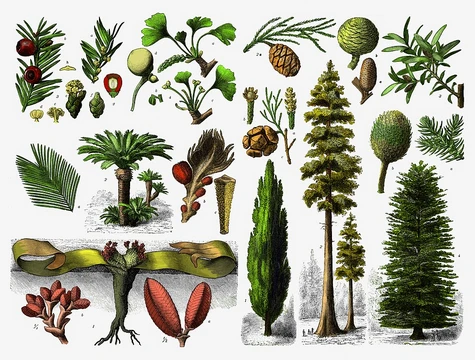
Picea rubens
Red spruce is a shade-tolerant conifer of eastern North America.

Picea rubens, commonly known as red spruce, is a species of spruce native to eastern North America, ranging from Nova Scotia to eastern Quebec and south-eastern Ontario, and south through the Adirondack Mountains and New England along the Appalachians to western North Carolina and eastern Tennessee. It is also known as yellow spruce, West Virginia spruce, eastern spruce, and he-balsam, and is the provincial tree of Nova Scotia. Red spruce is a perennial, shade-tolerant, late successional coniferous tree that under optimal conditions grows to 18–40 m tall with a trunk diameter of about 60 cm, though exceptional specimens can reach 46 m tall and 100 cm in diameter.
- field
- Botany
- native_range
- Eastern North America (Nova Scotia to Quebec, south to North Carolina and Tennessee)
- conservation_status
- Low genetic diversity, narrow ecological niche; subject to restoration efforts
- known_for
- Provincial tree of Nova Scotia; key species in southern Appalachian spruce-fir forest; used as tonewood for musical instruments
Lore & Background
Red spruce grows at a slow to moderate rate and is very shade-tolerant when young. It is often found in pure stands or forests mixed with eastern white pine, balsam fir, or black spruce. Along with Fraser fir, red spruce is one of two primary tree types in the southern Appalachian spruce-fir forest, a distinct ecosystem found only in the highest elevations of the southern Appalachian Mountains. Its habitat is moist but well-drained sandy loam, often at high altitudes. Red spruce can be easily damaged by windthrow and acid rain. Notable red spruce forests in West Virginia can be seen at Gaudineer Scenic Area, Canaan Valley, Roaring Plains West Wilderness, Dolly Sods Wilderness, and Spruce Mountain, all sites of former extensive red spruce forest. Red spruce is closely related to black spruce, and hybrids between the two are frequent where their ranges meet. Genetic data suggests that the red spruce peripatrically speciated from the black spruce during glaciation in the Pleistocene. The tree is used for Christmas trees and is an important wood used in making paper pulp. It is also an excellent tonewood and is used in many higher-end acoustic guitars and violins, as well as sound boards. The sap can be used to make spruce gum. Leafy red spruce twigs are boiled with sugar and flavoring to make spruce beer or spruce pudding. It can be used as construction lumber and is good for millwork and for crates.
Reader's Guide
Red spruce holds significance as a foundational species in high-elevation forests of eastern North America, particularly in the southern Appalachian spruce-fir forest, a rare ecosystem. The tree's sensitivity to acid rain and climate change has made it a focus of conservation efforts, such as the Central Appalachian Spruce Restoration Initiative, which unites diverse partners to restore historic red spruce ecosystems. Reductions in acid deposition have contributed to red spruce resurgence in some mountain areas in the northeastern United States, suggesting that policies aiming to reduce atmospheric pollution have been effective. However, its low genetic diversity and narrow ecological niche make it vulnerable to environmental changes. The tree's role in the ecosystem, its economic uses, and its response to pollution highlight its importance as an indicator species for forest health and the effectiveness of environmental policy.
Did You Know?
- Red spruce is the provincial tree of Nova Scotia.
- Red spruce is closely related to black spruce, and hybrids between the two are frequent where their ranges meet.
- During the 1980s, increased acid deposition contributed to a loss of high-elevation red spruce trees caused by leached calcium and decreased freezing tolerance.
Frequently Asked Questions
Who is Picea rubens?
Red spruce is a shade-loving conifer native to eastern North America, stretching from Nova Scotia and Quebec down through the Appalachians to western North Carolina and eastern Tennessee. It goes by several other names—yellow spruce, eastern spruce, he-balsam—and holds the title of provincial tree for Nova Scotia.
How does Picea rubens's story end?
Red spruce faces long-term vulnerability due to its low genetic diversity and narrow ecological niche, which make it especially sensitive to climate shifts and disease. Active conservation and restoration programs are underway, particularly in the southern Appalachians where much of its remaining range is concentrated.
Why is Picea rubens important?
Beyond serving as a keystone in Appalachian spruce-fir ecosystems, red spruce carries cultural weight as Nova Scotia's provincial tree and economic value as premium tonewood. Its restricted range and genetic bottleneck make it a priority species for biodiversity conservation in eastern North America.
Where does Picea rubens live?
Its native range runs from Nova Scotia, eastern Quebec, and south-eastern Ontario in the north, southward through the Adirondacks and New England along the Appalachian chain to western North Carolina and eastern Tennessee. It favors cool, moist, high-elevation habitats where it can establish in partial shade.
More in Conifers And Gymnosperms 1-24
Elsewhere in the Conifers And Gymnosperms universe
Spotted an error? Know more?
This is a living reference — every entry is fact-audited, and reader corrections feed straight into our audit queue. Suggest an edit · See this site's audit record