Pine nut
Edible seeds of pines, harvested for millennia across continents.

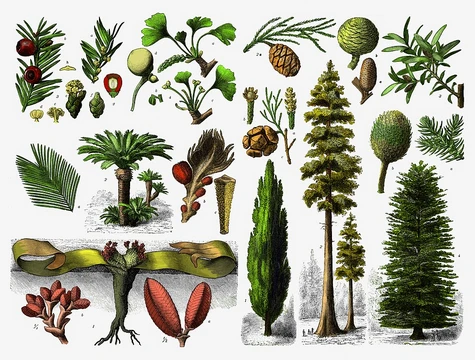
Pine nuts, also called piñón, pinoli, or pignoli, are the edible seeds of pines (family Pinaceae, genus Pinus). According to the Food and Agriculture Organization, only 29 species provide edible nuts, while 20 are traded locally or internationally due to sufficient seed size. As pines are gymnosperms, pine nuts are not true nuts but bare seeds, an example of convergent evolution with angiosperm fruits.
- type
- Edible seed
- major_exporters
- China, Russia, North Korea, Pakistan
- key_species
- Korean pine, chilgoza pine, stone pine, Colorado pinyon
- culinary_use
- Essential in Italian pesto sauce
- nutritional_highlight
- Rich in manganese, copper, magnesium, zinc
- harvest_region
- Asia, Europe, North America
Lore & Background
Pine nuts have been eaten in Europe and Asia since the Paleolithic period. In Asia, the Korean pine is the most important species in international trade, while the chilgoza pine is harvested in the western Himalaya. Russia is the largest producer of Siberian pine nuts, with most exported to China. In Europe, the stone pine has been cultivated for over 5,000 years. In North America, three pinyon pines—Colorado pinyon, single-leaf pinyon, and Mexican pinyon—are the main species, with nuts known as piñón.
Reader's Guide
Pine nuts are significant as a food source dating to the Paleolithic period and as a key ingredient in Italian pesto sauce, which surged in popularity since the 1990s. They are nutritionally dense, providing high levels of fat, protein, and minerals. Ecologically, they are vital for many animals, and overharvesting has led to ecosystem threats. The distinction between true nuts and gymnosperm seeds highlights their botanical uniqueness. Commercially, they are often frozen to preserve flavor, as shelled nuts deteriorate rapidly. The elevation of pinyon pines, ideally around 2,100 meters, influences cone production, with lower elevations causing dryness and higher elevations causing freeze-drying damage. The trade involves major exporters like China, Russia, North Korea, and Pakistan, with Asian nuts being stubbier and European nuts longer. American piñon nuts are noted for large size and ease of shelling.
Did You Know?
- Pine nuts are not true nuts because pines are gymnosperms, meaning the seed is not enclosed in an ovary.
- The stone pine has been cultivated for its nuts for over 5,000 years.
- In the United States, treaties and laws guarantee Native Americans' right to harvest pine nuts in Nevada and New Mexico.
- European pine nuts are longer than they are wide, while Asian pine nuts are stubbier, like long corn kernels.
More in Conifers And Gymnosperms 1-24
Elsewhere in the Conifers And Gymnosperms universe
Spotted an error? Know more?
This is a living reference — every entry is fact-audited, and reader corrections feed straight into our audit queue. Suggest an edit · See this site's audit record