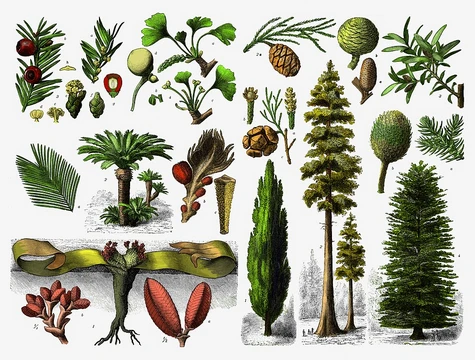
Pinus pinea
Mediterranean pine valued for nuts, ornament, and disputed native range.

Pinus pinea, commonly known as the Italian stone pine or Mediterranean stone pine, is a coniferous evergreen tree from the pine family Pinaceae. Native to the Mediterranean region, it occurs in Southern Europe and the Levant, and has been introduced to North Africa, the Canary Islands, South Africa, and New South Wales. The species has been cultivated for its edible pine nuts since prehistoric times and is widely planted as an ornamental tree, having received the Royal Horticultural Society's Award of Garden Merit.
- Scientific name
- Pinus pinea
- Family
- Pinaceae
- Native region
- Mediterranean (Southern Europe and Levant)
- Typical height
- 12–20 m (40–65 ft), up to 25 m (80 ft)
- Seed maturation time
- 36 months
- Notable feature
- Edible pine nuts, umbrella-shaped crown
- Conservation status
- Not assessed in article
Lore & Background
In Greece, an extensive stone pine forest exists at Strofylia in the western Peloponnese, mixed with Pinus halepensis, which is now outcompeting it. The tree is a diagnostic species of the vegetation class Pinetea halepensis. Pests include the introduced Western conifer seed bug, which has destroyed most pine nut seeds in Italy, and the fungus Pestalotiopsis pini, found as an emerging pathogen in Portugal, causing shoot blight and stem necrosis.
Reader's Guide
Pinus pinea holds significant cultural and economic importance across the Mediterranean and beyond. Its edible pine nuts have been traded since early historic times, and the tree has been cultivated for at least 6,000 years. It is among the current symbols of Rome, planted along historic roads like the Via Appia during the Roman Republic, and was used ornamentally in Istanbul during the Ottoman period and in Italian Renaissance gardens. Since the 1700s, it has been introduced to other Mediterranean climate regions, including South Africa, California, and Australia, where it has naturalized and is listed as invasive in South Africa. The tree also provides resin, bark for tannin, and pine cone shells for fuel, and is used for coastal dune consolidation and soil conservation. Its long history of human cultivation blurs the line between native and naturalized populations, making it a controversial species in biogeography. The Royal Horticultural Society's Award of Garden Merit underscores its ornamental value, while pests like the Western conifer seed bug threaten its nut production in Italy.
Did You Know?
- The stone pine's cones take 36 months to mature, longer than any other pine.
- The seeds have a rudimentary wing that falls off easily, making them ineffective for wind dispersal; they are animal-dispersed, originally mainly by the Iberian magpie.
- The Western conifer seed bug, accidentally imported from the western US to northern Italy in the late 1990s, has destroyed most pine nut seeds in Italy.
- Pinus pinea is a diagnostic species of the vegetation class Pinetea halepensis.
Frequently Asked Questions
What is Pinus pinea?
Pinus pinea is an evergreen conifer in the pine family (Pinaceae), widely known as the Italian or Mediterranean stone pine. It is easily recognized by its broad, umbrella-shaped crown and is native to the Mediterranean basin, spanning Southern Europe and the Levant.
What is Pinus pinea most famous for?
The species is prized above all for its edible pine nuts, which have been harvested by humans since prehistoric times. It also serves as a popular ornamental planting, having earned the Royal Horticultural Society's Award of Garden Merit.
How tall does Pinus pinea typically grow?
Most specimens reach between 12 and 20 meters (roughly 40 to 65 feet), though exceptional individuals can push up to 25 meters (about 80 feet).
How long do Pinus pinea seeds take to mature?
The pine nuts require a full 36 months to reach maturity on the tree, making it one of the slower-maturing pines in terms of seed development.
Why is Pinus pinea's native range considered disputed?
While it is generally regarded as native to the Mediterranean region, the exact boundaries of its original distribution—particularly how far into North Africa and other areas it was truly indigenous versus merely introduced—remain a point of ongoing botanical debate.
More in Conifers And Gymnosperms 1-24
Elsewhere in the Conifers And Gymnosperms universe
Spotted an error? Know more?
This is a living reference — every entry is fact-audited, and reader corrections feed straight into our audit queue. Suggest an edit · See this site's audit record